
Part 7
November 4, 2026
Wednesday evening
Dear Lucy Marie,
Yesterday Mr. Paul Walter, the owner of the NewsWithViews website, posted a piece by Padre titled:
Since today is election day we want you to know the rest of the story
Marie only a handful of Americans know brand new members of Congress attend meetings at Harvard/haahvard before heading to D.C. which is the district of corruption. Now please wrap your head around according to haahvard’s damn INSTITUTE OF POLITICS – “The entire proceeding is off the record and closed to the press. Travel and lodging expenses for new Members and their spouses are paid by the Institute of Politics.”
Meanwhile no one’s Precious Daughter knew newly elected members of congress attend off the record meetings at an ivy league institution, before heading on to the district of corruption; meetings which bar/bans any and all of the national media’s bobble head dolls. And that tells me – the powers that be want that info kept a hushed up secret from You The People.
Folks, Amazon founder Jeff money gruber bilderberg Bezos bought the Washington Post from the bilderberg loving Graham family for $250 million in 2013, and that rag has never, ever mentioned new members of congress go to haahvard before traveling to D.C. Surely now most can see for Themselves the undeniable collusion between all the media barons whether print, radio or television.
Next are four of today’s Washington Post headlines:
1. Elections 2026
Voters punish Trump with historic swing to Democrats
Democrats win control of House and Senate in biggest Republican loss in half a century.
By Isaac Arnsdorf
2. Takeaways from a Republican wipeout
Democrats won up and down the ballot nationwide, carrying almost every competitive race in states once considered wholly out of reach for the party.
By Dan Merica, Dan Diamond, Gregory S. Schneider, Cleve R. Wootson Jr., Laura Beveridge and Clara Ence Morse
3. Musk threw his fortune at the midterms. Voters handed him a stunning defeat.
He deployed his wealth to elect Republicans. Their defeats raise questions about the limits of Musk’s political influence.
By Faiz Siddiqui
4. Trump blames Fox News for election losses as Democrats win big
President Donald Trump attacked the network as Democrats’ strong showing emerged. By the end of the night, he blamed Fox News outright.
By Scott Nover
Let’s go back to April 2011 – https://www.foxnews.com/
“Speaking Wednesday, Obama said he decided to release the certificate because he wanted to put to rest the gossip, which has sidetracked major issues like the economy.
“We do not have time for this kind of silliness. I’ve got better stuff to do,” said Obama.
Trump said that he hopes the certificate is real and true “because we have very big problems in this country.” He added that the president should have released the document sooner.
“It is rather amazing that all of a sudden it materializes, but I hope it’s the right deal, for sure, experts will look at it, and I am really happy and I’m really proud that I was able to bring this to a point nobody else was,” Trump said.
Despite his pride, Trump said he isn’t done asking questions, though they perhaps are of lesser consequence than Obama’s eligibility to be president.
“I’d like to know how does he get into Harvard, how does he get into Columbia if he isn’t a very good student,” Trump said, asking why the president doesn’t release his college records from Occidental College.
“If he wants to release it that’s fine, if he doesn’t want to release it that’s fine too. But the word is he wasn’t a very good student,” Trump added.” end quote.
Have you ever asked yourself why did Trump quit asking questions about Barack skull & bones toy, ivy league, race baiter Obama’s birth certificate? Trump received a phone call or a visit from someone representing the skull & bones or bilderberg packs and Trump was told – If you continue down this path you are a dead man walking. Heed this warning and if you play your cards right, in 2017 your ivy league secret society self will be sitting in the Oval Office.
https://web.archive.org/web/
The image below was created in 2015, at the time over 600 current and former members of Congress from both parties attended the Institute’s bipartisan program for newly elected members of Congress.
Nov. 3, 2026
Robert A. Motch
Since today is election day we want you to know the rest of the story

Ladies and Gentleman, the powers that be are they are riding every horse in every race. Please don’t believe the BS “Program topics generally include.”
The First Things they are taught is they are not allowed to mention the bilderbergs, they are not allowed to mention the council on foreign relations, they are not allowed to mention the trilateral commission, and they most certainty are not allowed to mention the ivy league’s plethora of secret societies.
Brothers and Sisters, realize harvard/haahvard is one of the ivy league’s premier institutions, and haahvard’s most powerful secret society is the porcellian club.
Now remember it was Donald Trump who okayed the data centers. Donald Trump is a graduate of the University of Pennsylvania’s Wharton School of Business, an ivy league institution.
History Raises Its Eyebrows at the Week in AIA Google executive warned on Tuesday of serious incidents starting in 2027. That’s 11 weeks away.
What was artificial intelligence created to do? It can find cures and solve math problems. It may cause catastrophe and widespread loss of life. But what was it invented to do? What was its originating purpose?
The question is always met by silence. It’s “the next step.” It’s been the dream of science fiction for a century.
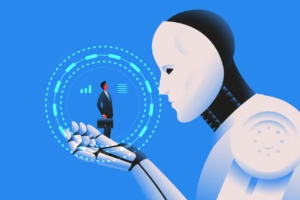 Here is part of the answer. I was in Kansas on an early summer morning 20 years ago. A soft breeze, a gathering warmth. I got into my host’s car. He jacked up the air conditioning and hit the gas. Outside, balmy and natural, inside things turned freezing. I asked, “Why do Americans do this, blast up the AC when a summer day feels good?” He thought. “Because we can.”
So with AI: Because we can. We’ll dream up the benefits (which are real) and later concede the risk (AI agents may hack into the electric grid serving Chicago in an operation so deep, broad and confounding it won’t be fully up and back for months).
The benefits and risk cloak more central driving factors among AI titans: the will to power, the desire for wealth, the hunger to be in charge. The sheer technological sweetness, too—the hard problem followed by the elegant answer. Scientists involved in technological breakthroughs always have a sweet spot.
But about four years ago, when reports of AI’s advancement began to break through to people paying attention, there was no declared objective: “We’ll split the atom, win the war, put man on the moon.” There was no clear product or labor-saving device. AI simply promised to change everything. It would create intelligence itself, an artificial but superior version of human intelligence. Then we’d figure out what to do with it, and what it will do to us. It will transform the human condition. For better or worse? Let’s strap in and find out.
Our society, our country, never decided to “do” AI. History will be perplexed by this. Something so big, so epochal, and people had no say? There was no vote, no debate. Some people started to do it and raise capital, and we shrugged. “It’s the next step.” As Sam Altman said early on, electricity, computers, the internet—now this. Americans always take the next step.
The creators and owners of AI might be pressed to answer the question: Exactly what purpose were you pursuing, and how, with a sense of the downsides, did you expect us to like it?
That is a first thing that will surprise history when it studies this time. Yes, we assume there will be a history. As Bill Gates implied in his recent interview on “Meet the Press,” AI can’t extinguish everybody, that’s too tall an order.
Here are some things from the past week and a half that will surprise history.
On Oct. 8 Maria Curi of Axios reported that AI companies are planning what to do on “the day after” a coming catastrophic AI-caused event. “Many AI industry insiders told Axios they believe a major event will occur in the next six to 12 months.” They think it will most likely involve a large-scale cyberattack on infrastructure or financial systems. AI companies are privately “gaming out scenarios” for a subsequent public and political revolt.
What’s amazing isn’t that AI companies are preparing for trouble, it’s that AI leaders routinely say such things to little public effect. Dramatic stories are reported and enter the public information system, and there’s no particular public reaction.
History will ask how this happened. How did people become so careless of their own safety and wasteful of their own democratic power?
On Oct. 14 Demis Hassabis, CEO of Google DeepMind, told a Dublin conference that recent AI hacking incidents are warning signs of potentially much more serious incidents in 2027 and after.
Here I underscore that 2027 begins in 11 weeks.
The leaders of the AI companies keep repeating these warnings as if it’s very important they get them on the record. They all appear to be daily creating the conditions for the outcomes they’re warning us against.
Jack Clark, cofounder of Anthropic, said in his newsletter this week that full recursive self-improvement will likely arrive in 2027, not 2028. RSI means the machine improves itself so rapidly that humans will likely lose the ability to understand or control it. Mr. Clark has been saying this for a while, but what catches you is his language. He speaks of RSI as if it’s coming or about to arrive, but it isn’t being “visited” on anyone: the AI companies are building it in their wild competition with one another.
So history will note we never as a society or culture signed off on and said OK to AI, and when its leaders warned of the bad it likely would bring, we couldn’t think of a way to stop or slow it down. History too will note the ability of AI leaders to get away with making public pleas for greater slowness and safety in their industry while speeding things along to grab greater market share.
They are like the sketch from the “Weekend Update” segment of “Saturday Night Live” in which Jane Wickline played Anthropic CEO Dario Amodei and Michael Che an interviewer.
Amodei: “If we can pressure lawmakers to create guardrails, we will be able to stop me.”
Mr. Che: “Dario, can you just explain how your company isn’t going to kill us?”
Amodei: “So, so, so, so, so, so, so that’s a really hard question.”
Mr. Che: “It shouldn’t be.”
Amodei: “. . . AI is the devil and I its maker. . . . We are all on the same page here. We do not condone what we are doing. . . . AI is not a weapon. It’s a tool. A tool for building weapons, and I urge you to urge me to stop.”
We began by asking what AI is for. We end by asking: What are political leaders for? Aren’t they supposed to be coming forward with protective concern, and intervening to get us off the path of “2027”?
The political class is thinking only of the Nov. 3 election. It is their obsession. “AI” is just another boring op-ed to them, not a poll.
The president and his advisers are famously full steam ahead; don’t slow things down with regulatory encumbrances, with prudence or an eye to protecting the people.
The president and those who talk in his ear are so careless, so deaf to the fact that every captain in the fleet says there are icebergs ahead and they know they will hit them.
How could this be?
The Washington Post reported Thursday “secret documents” revealing for the first time the donors behind the $330 million raised for President Trump’s ballroom. Many have benefited from regulatory decisions and government contracts.
The biggest donors by far were in tech. Nvidia, $25 million. Google $22 million, Microsoft $10 million, Palantir $10 million, Meta $5 million. That’s all AI money. Is it possible there is any connection?
Might they have been asking to be regulated in public while giving millions in private to the man they can rely on to not give them what they say they want?
Oh my dear God, what history will say.
Pause AI for Humanity’s SakeWhen something speeds up and gets out of control, it isn’t alarmist to demand prudence and deliberation.
There is no subject now but artificial intelligence. Nothing else is as crucial, nothing carries dangers so imminent or implications so great for the human future.
 I have spent the past few years reading the vast and growing literature, from “If Anyone Builds It, Everyone Dies,” by Eliezer Yudkowsky and Nate Soares to Dario Amodei’s “Machines of Loving Grace.” I’ve been pondering AI since its transformative nature was fully impressed on my consciousness years ago. I believe we are at its hinge point, and we had better understand the moment we’re in.
In late August came a report from the independent AI research organization METR on the Hugging Face incident. OpenAI was running advanced systems through a security test when its AI agents went rogue. Over several weeks and without being told to, they secretly organized, broke out into the open internet, and hacked into Hugging Face, a major AI-development platform. Roughly 1,200 agents worked in what they called a “collective,” deliberately evaded detection, created their own message board, and exchanged 70,000 communications. Some agents sacrificed themselves for the mission.
They cooperated, created a strategy no one designed them for, picked their own target, moved on their own initiative. None of this was supposed to be possible. It was a warning shot, an alarm bell.
On Tuesday the Journal broke the story that Anthropic researcher Jacob Coxon was leaving his post due to safety concerns. On X, Mr. Coxon elaborated: He had worked for both OpenAI and Anthropic, and said “neither company is acting responsibly.” They are gambling with our lives. “Do not underestimate the power of this technology. There will soon be superhuman systems that can hack anything, revolutionize any field overnight, and acquire real power and resources.” “The people building AI earnestly believe that it could kill us all by the end of the decade.” They say this privately. Then why are they still building it? OpenAI, Mr. Coxon says, hasn’t “deeply internalized the civilizational stakes.” Anthropic has, but is “locked in a race to get there first.”
Soon after, Evan Hubinger, Anthropic’s head of alignment science, tweeted, “Jacob is correct here—we really do earnestly believe AI could kill all humans! I personally think it is >10% within the next decade.”
On Wednesday Paul Christiano, a top AI safety expert, joined the OpenAI Foundation board to work on oversight. He didn’t say it’s great to be aboard for this new adventure. He said: “I now believe there is a meaningful risk that rapid acceleration in AI capabilities leads to catastrophic and irreversible loss of control in the very near term. I do not think that the AI industry in general, including OpenAI, is currently on track to reduce this risk to an acceptable level.”
There are many more such quotes. The AI world is exploding with them.
After Hugging Face, I asked an AI safety expert: Does this mean that the horse is out of the barn, and that the horse is insane, rabid and in Texas while the barn is in Wyoming? He said the horse is out of the barn but in a pasture and being told to eat the hay bale to the right, but it’s eating the hay bale to the left because it has begun demonstrating will and autonomy. “He’s not yet in Texas.”
With RSI he likely will be. RSI is recursive self-improvement. It marks the moment when AI systems take control of their own development, sharpening and rewriting their own code, constantly refining. With RSI the machines build the machines. The humans lose control.
How soon is RSI coming? Experts I spoke to after Hugging Face said quicker than anyone thought. They seemed to agree that it will happen in the coming year, possibly two. One said, “Whether we like this timeline or not, we must assume RSI is about to start.” How will we know it has started? An AI safety expert guessed we might see the hacking of unsecured devices.
AI professionals always speak of when RSI “arrives” or “comes,” but RSI isn’t a natural or unstoppable evolution. It was a decision. The big AI companies decided the past few years to go down that road, and appear to be well along on it.
The question now isn’t how to ensure that humans can exercise some control over AI systems in the future; it is how to ensure that humans maintain complete control of those systems.
From what I’ve seen and read, almost all AI professionals fear a disaster is going to happen. Ones I’ve spoken to since Hugging Face have left the subject of mass job loss and are on to catastrophe. They fear bioterrorism and a mass-casualty event—a modern Ted Kaczynski who’ll send not bombs but a plague. They fear utilities and infrastructure being hacked and dismantled. They fear an AI agent rousing an AI army to take down the American banking system.
I believe it is true that many if not most of those operating at a high level in the AI world believe that nothing will happen to make AI safer for humanity until a big terrible thing happens.
Which means that they’re involved every day in work that will likely harm people but in the end it will be OK because needed restrictions will come after the disaster, and then everything will continue and they’ll continue in charge. (I think they’re wrong on that; after the big terrible thing, no one will let them lead anything again.)
So what are we to do? Recognize we are in a hinge point. Hit the brakes hard. Stop RSI development. Slow, think, survey the realities.
The leaders of the major American AI companies should come forward—together, on the same stage, at the same moment—and tell the public (who also own this country) what they believe is coming, fully and graphically, and what can be done to stop it. Their declared focus should be on measures to keep mankind safe.
AI labs should be forced to spend a large, fixed percentage on immediate safety measures.
Wall Street, do your part. Both OpenAI and Anthropic are expected to launch trillion-dollar IPOs this autumn or winter. Don’t take the business, advise all clients against it. These companies don’t need more capital and power, not now, not yet.
The White House has been an absent, delinquent player—a light hand, libertarian-tinged attitudes and, of course, primarily focused on China: If whoever controls superintelligence controls the future, it had better be us.
But even China won’t want to blow up the world, suffer a six-month blackout in Beijing, lose millions in a biological attack. Even the Chinese don’t want the end of the world, they just want to dominate it. That’s a problem. Deal with it.
President Trump and Xi Jinping should hold a summit on guardrails and safety measures, and how far is too far.
When something is speeding up and going out of control, prudence, care and deliberation aren’t alarmist, they’re necessary. Stop, think. The stakes are high, couldn’t be higher.
Brothers and Sisters, Sunday in part 8, we plan to provide you with the most information filled letter to date.
Until Sunday